Octayne Rx · Chapter 11
Fee applications, drafted and defended.
For restructuring professionals. Rx watches the work you already do, drafts the entry in your own voice against the case's own task codes, and runs the examiner's checks before you file.
Private to the professional. Nothing is shared with your firm unless you choose to share it.
Reviewed draft of second interim fee application exhibit C and reconciled task-code hour totals against the underlying ledger export.
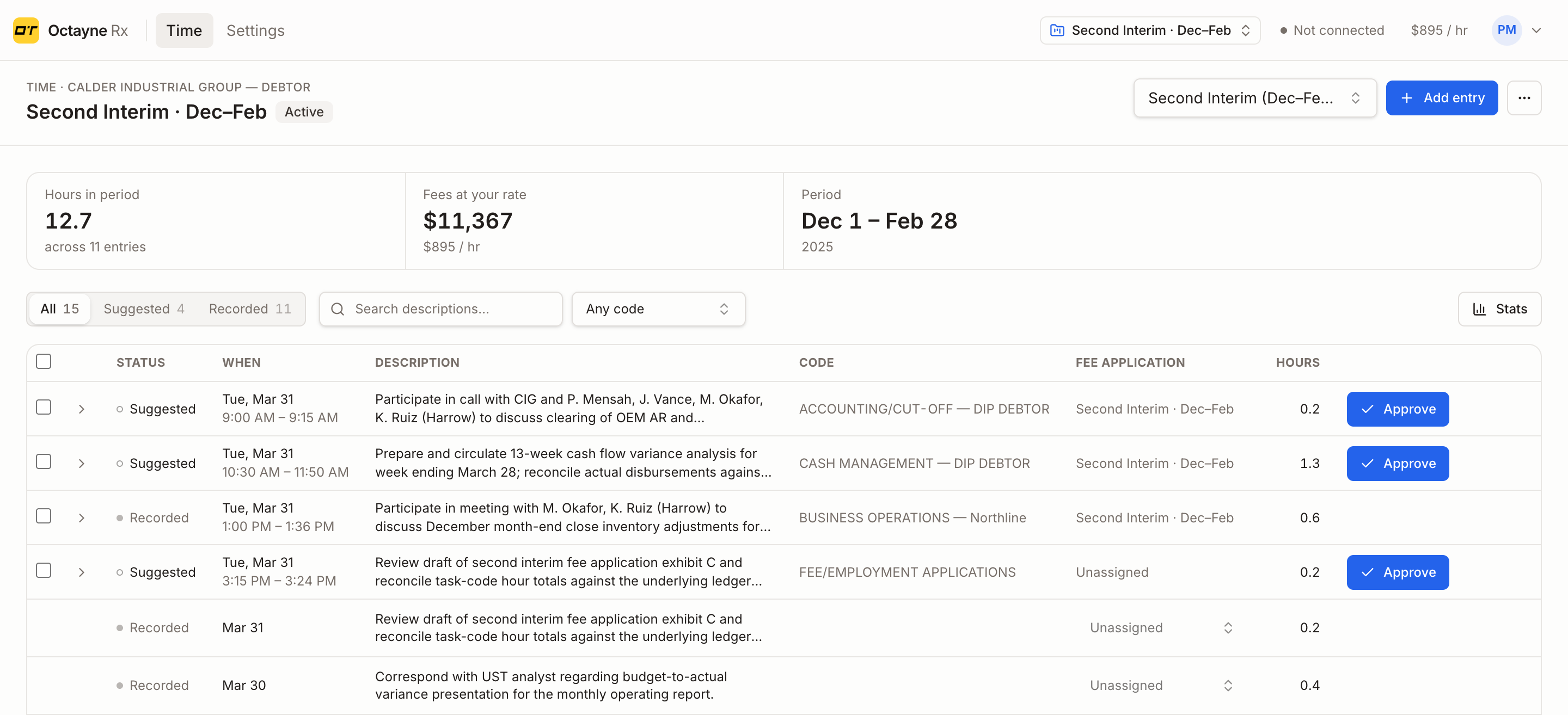
One professional, one license
It is yours. Your firm does not have to adopt anything.
Rx is licensed to you, not to a practice. There is no rollout, no committee and no dependency on what the rest of the firm runs.
You bring your own case, your own rate and your own writing conventions. Every collector installs for you alone — none of them needs an administrator, a tenant-wide policy, or a line on someone else's roadmap.
 Outlook Add-in Threads, calls and calendar
  Word Add-in Documents drafted and revised
  Excel Add-in Models, schedules, exhibits
  PowerPoint Add-in Board and committee materials
 - Private until you send it Entries stay yours. Nothing reaches a fee application, a colleague or the firm until you export it — the default is that no one else sees your week.
- Compliance is the default, not a review step Block billing, vague verbs, banned phrases and rounding are checked as each entry is drafted — before an examiner ever sees it.
Day one
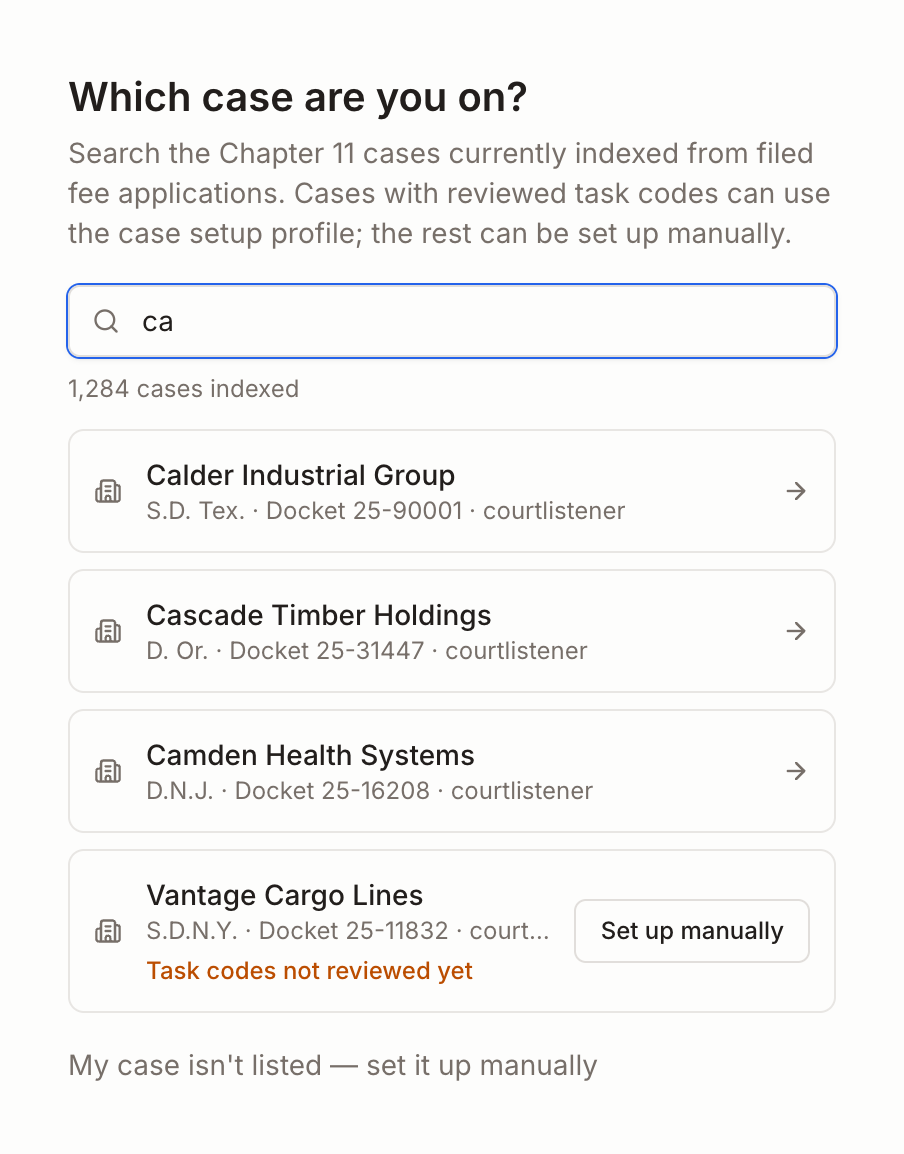
Start on a case that is already in the system.
Rx indexes Chapter 11 cases from fee applications that have already been filed. Find yours, and the task codes, billing conventions and application schedule are there before you write a single entry.
Court, docket and source sit on every result, so you can tell you have the right one. A case whose task codes have not been reviewed says so rather than guessing — you set that one up by hand and keep everything else.

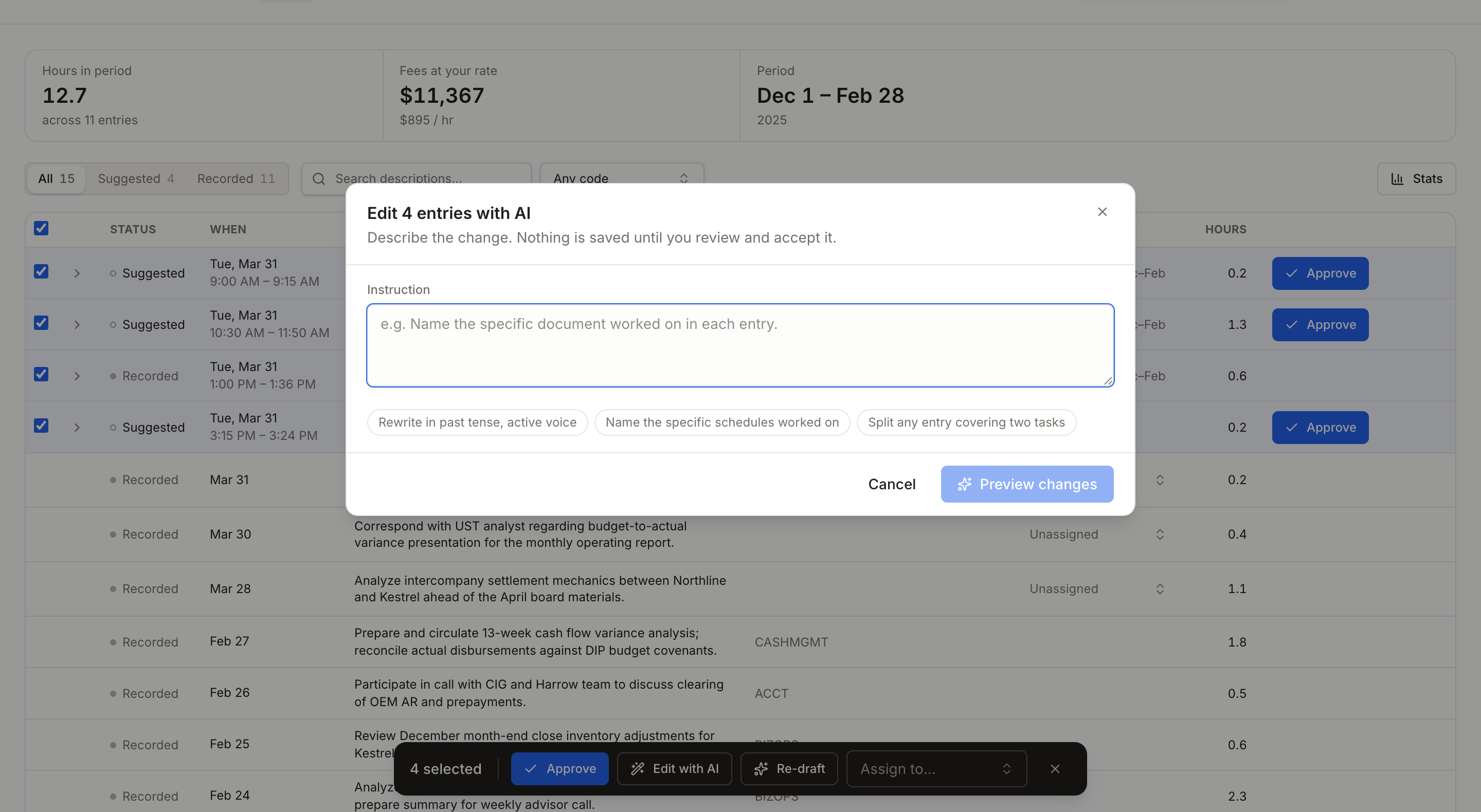
Bulk edit
Change a hundred entries with one instruction.
Select a period, describe the change in a sentence, and review what it would do before anything is written. Re-draft, re-code, split block-billed entries or assign a whole selection to a fee application — as one action rather than a hundred.
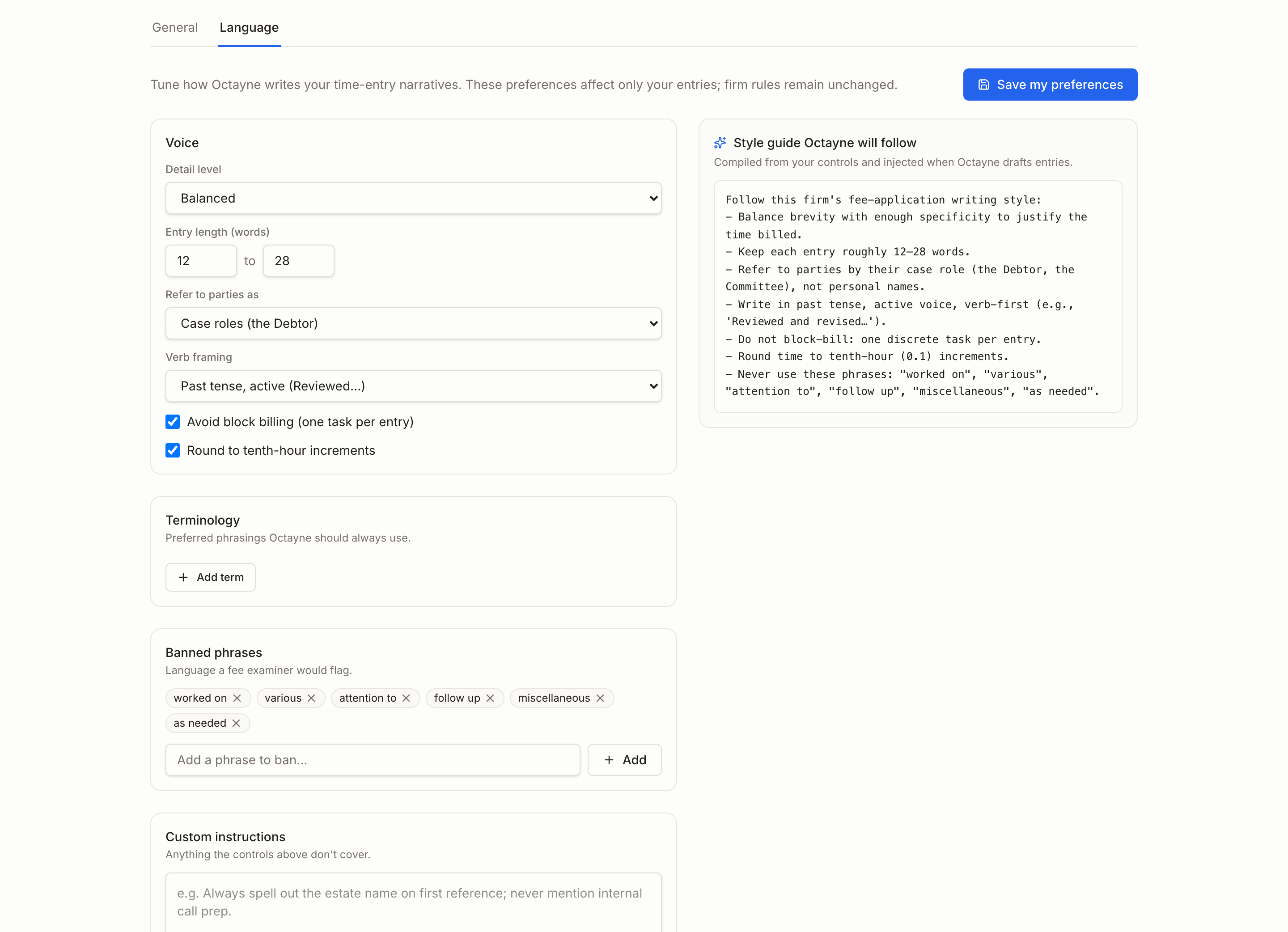
Language controls
Every convention a fee examiner checks, as a control you set.
Detail level and entry length. Whether parties are named or referred to by case role. Tense and verb framing. Block billing and rounding. Phrasings to prefer and phrasings to ban outright. Your controls compile into the style guide Rx follows on every draft, and you can read it.
And then
The filing work, done before the deadline finds you.
- 01
Fee applications that assemble themselves
Entries route into the right monthly or interim application. An unrouted queue shows exactly what is not yet assigned, so nothing is discovered at filing time.
- 02
A fee-examiner review before you file
The checks an examiner runs, run first — block billing, vague verbs, rounding, task-code fit — with the fix offered inline, so the objections you can predict are gone before you file.
- 03
Tuned on what courts have already accepted
The drafting model is tuned on the public record of fee-application entries — the narratives that have already been filed, reviewed and paid. It writes toward what survives examination rather than toward what merely reads well.
Next step
See Rx against a case you have filed.
Bring a fee application you have already submitted. We will run the examiner checks against it and show you what Rx would have caught first.